

Eye Movement Desensitisation & Reprocessing
What is an EMDR session like?
EMDR utilises the natural healing ability of your body. After a thorough assessment you will be asked specific questions about a particular disturbing memory. Eye movements, similar to those during REM sleep will be recreated simply by asking you to watch a moving light backwards and forwards across your visual field.
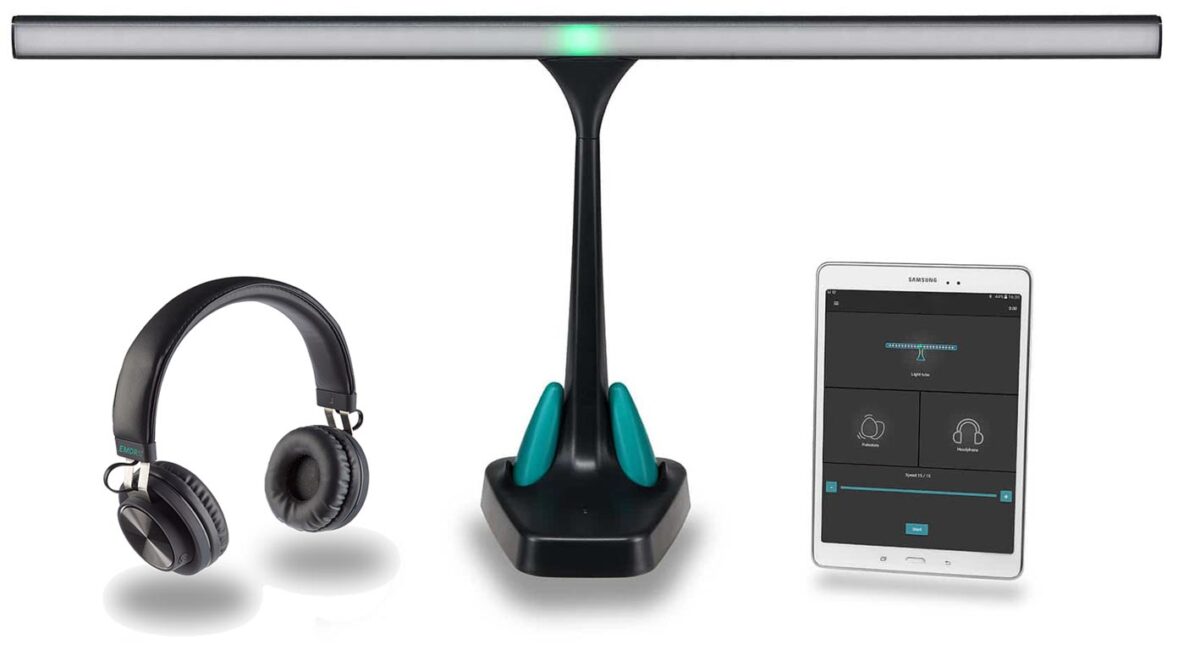
If there is an issue with eye movement, we can use headphones with sound or handheld vibrating devices. The eye movements will last for a short while; you will then be asked to report back on the experiences you had during each of these sets of eye movements.
Experiences during a session may include changes in thoughts, images and feelings. With repeated sets of eye movements, the memory tends to change in such a way that it loses its painful intensity and simply becomes a natural memory of an event in the past.
Other associated memories may also heal at the same time. This linking of related memories can lead to a dramatic and rapid improvement in many aspects of your life.
Most of the time your body frequently manages new information and events without you being aware of it. However, when something out of the ordinary occurs and you are tormented by an overwhelming event (e.g. a car accident) or being repeatedly subjected to overwhelming emotions (e.g. childhood neglect), your natural coping mechanism can become overloaded. This overloading can result in disturbing experiences remaining frozen in your brain or being “unprocessed”.
Such unprocessed memories are stored in the limbic system of your brain in a “raw” and emotional form, rather than in a verbal “story” mode. This limbic system maintains traumatic memories in an isolated memory network associated with emotions and physical sensations, disconnected from the brain’s cortex where we use language to store memories.
The limbic system’s traumatic memories can be continually triggered when you experience events similar to the difficult experiences you have been through. Often the memory itself is long forgotten but the painful feelings such as anxiety, panic, anger or despair are repeatedly triggered in the present. Your ability to live in the present and learn from new experiences can therefore become inhibited. EMDR can help create the connections between your brain’s memory networks, allowing your brain to process the traumatic memory in a very natural way.

What can EMDR be used for?
EMDR has been successfully used to treat:
- Anxiety and panic attacks
- Depression
- Stress
- Phobias
- Sleep problems
- Complicated grief
- Addictions
- Pain relief, phantom limb pain
Is EMDR for everyone?
Because EMDR is a rapid process, it can invoke unsettling experiences. However, if this happens, it will only be for a comparatively short period of time. You will need to be aware that strong feelings and disturbing thoughts may occur during sessions. We can discuss whether EMDR is right for you during our sessions.
You will remain in control and can stop the process at anytime.
EMDR is recognised by NICE (the National Institute for Health and Care Excellence) as an effective treatment for PTSD.
Get in touch today


